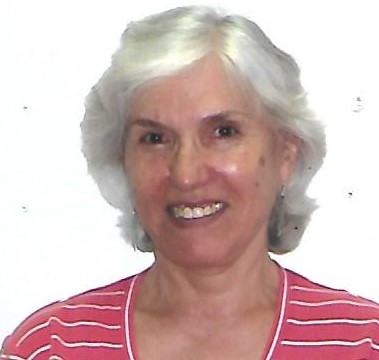
Born in Yugoslavia of Russian émigré parents in 1938. Early childhood: raised on stories of the Russian Revolution, then running from bombs and surviving the German occupation.
Growing up on 4 continents: After Yugoslavia in German Forced Labor and then Displaced Persons camps (5years) – in Morocco, a French colony (9 years) – in Australia (4 years). This “school of hard knocks” caused me to become fluent in 5 languages and made me a life-long learner about “the way of the world.”
Adulthood: Marriage to Richard De Roeck, a Belgian-born student in Australia, a “corporate brat” whose parents had been re-transferred to the United States, where we joined them in 1962. More learning to do: what does it mean to become (a hyphenated) American? Exploring the United States: Connecticut, New York City (Manhattan), California, New York City (Queens, Staten Island), Michigan, Arizona.
Family: My parents remained in Sydney, Australia. Visits back and forth: my dad lived with us for a few years. Our son Alex was born in 1966 in Berkeley, California, during the anti-Vietnam War movement: war and peace issues never go away. Our daughter Muriel was born in 1971 during the rise of the Feminist movement: what are a woman’s options in life? When the nuclear arms race with the Soviet Union escalated in the 80s, I felt that a mother’s job was at the front lines of peace work, not just at the kitchen sink. After all, I was fluent in Russian, and it was time for me to use it: this initiated a number of trips.
Trips: travel has many faces. My family’s escapes from country to country were not exactly tourist junkets. And after I had found a sense of security in my adult American life, why rock the boat? Had I not been raised on the horror stories of the Russian Revolution? How crazy was it to consider actually crossing the threshold of the “Evil Empire”? But mother’s job is never done, and my first very tentative trip was to an International Peace Conference held in Prague in 1983.
This was followed by many, mostly “people to people” trips to a number of countries: first to the Soviet Union, then the Russian Federation and Ukraine – but also south of the border to Central America and then the Middle-East – and back to Morocco, Germany, and now “former” Yugoslavia. Thus, childhood experience (I remember wondering why the world was such a mess) could be revised in the light of reflection: historical and increasingly, political: it turned out that there was, after all, a method to the madness.
Career: my fluency in several languages facilitated pursuing a Ph.D. in Comparative Literature which I received in1985 from CUNY (the City University of New York). But my academic career proved, eventually, disappointing. Literary criticism was strictly formal and increasingly “post-modern.” The scholarly consensus was that the search for meaning was naïve, obsolete, and subject to permanent deconstruction. And my goal of introducing students to the glories of literature proved beside the point. My advanced class of Russian at the University of Arizona, as it turned out, was preparing my best students for the career of spying.
Golden years: time to put it all together: I decided to write a memoir.
 Rise and Shine: Galina DeRoeck's Website